

If you’ve been scrolling through skincare TikTok or browsing K-beauty forums lately, you’ve likely stumbled across the term. But what is a PDRN mask, exactly? At its most essential, a PDRN mask is a regenerative skincare treatment infused with polydeoxyribonucleotide (PDRN)—purified DNA fragments, most commonly sourced from salmon—that helps repair skin at the cellular level. Think of it less like a traditional hydrating sheet mask and more like a targeted recovery tool that signals your skin to rebuild itself from within.
Where standard masks work on the surface, a PDRN mask operates deeper. The ingredient itself has roots in regenerative medicine, where it’s been used since the 1980s to accelerate wound healing and tissue repair. Now, it’s making the leap from dermatologist offices into at-home routines, offering benefits like barrier repair, collagen stimulation, and deep hydration—all in a format that takes 20 minutes or less.
In this guide, we’ll walk through the science, the benefits, the different mask formats, and how to choose a quality product. Whether you’re dealing with post-procedure sensitivity, stubborn dullness, or the first signs of aging, understanding PDRN skincare could be the upgrade your routine has been missing.
Key Takeaways
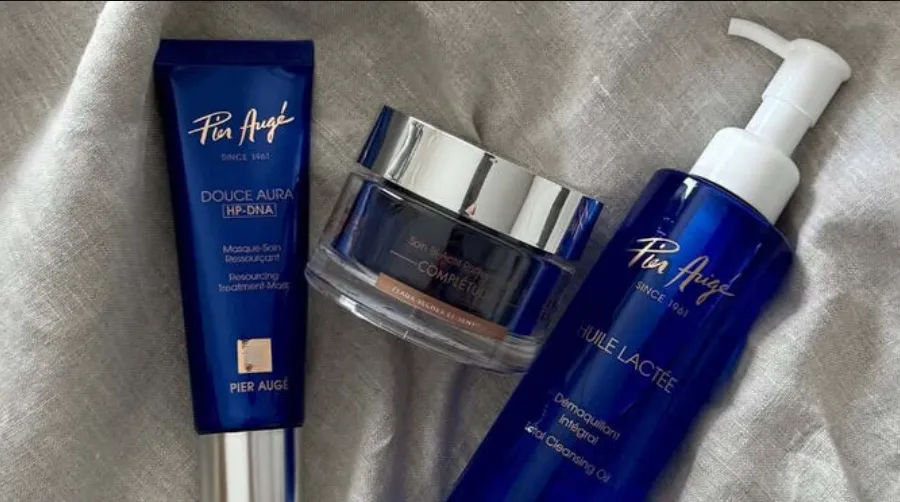
- A PDRN face mask delivers polydeoxyribonucleotide. The Douce Aura formula uses High-purity PDRN — a molecule with 98% similarity to human DNA, allowing for high biocompatibility and minimal irritation risk.
- PDRN works through a dual mechanism: it activates adenosine A2A receptors to reduce inflammation and promotes fibroblast activity to boost collagen synthesis.
- The “salmon DNA mask” label comes from the ingredient’s origin—purified DNA derived from salmon milt, refined to pharmaceutical-grade purity before use in skincare.
- Clinical data shows meaningful improvements in skin barrier function, elasticity, and wrinkle reduction with consistent use.
- PDRN hydrating mask formats range from daily sheet masks to intensive overnight treatments, making them versatile for different lifestyles and skin needs.
What Is a PDRN Mask?
A PDRN mask is a topical skincare treatment—available in sheet, hydrogel, and cream/overnight formats—that’s saturated with polydeoxyribonucleotide, a compound composed of short-chain DNA fragments. When applied to the skin, the mask creates an occlusive environment that encourages deeper absorption of the active ingredient, making it more effective than standard serums that may evaporate before full penetration.
The molecule itself is not new. PDRN was first introduced in Italian regenerative medicine for wound healing and tissue repair. Its transition into topical skincare happened much later, though one French brand—Pier Augé—was notably ahead of the curve, pioneering the use of salmon-derived PDRN in skincare formulations as early as 1979. For a detailed explanation of the technology, read more about what is a PDRN mask. Today, PDRN masks are a staple in Korean aesthetic clinics and are gaining traction globally as consumers seek science-backed, repair-focused skincare.
The defining feature of a PDRN face mask is its mechanism: rather than simply depositing moisturizing ingredients on the skin’s surface, it delivers nucleotide fragments that skin cells recognize and use as building blocks for their own repair processes. This is fundamentally different from ingredients like hyaluronic acid (which attracts water) or peptides (which signal specific protein production). PDRN provides the raw material for cellular regeneration itself.
The Three Main Formats
PDRN masks generally come in three delivery systems, each with distinct advantages:
- Sheet masks: Pre-cut fabric sheets soaked in PDRN essence. They’re the most accessible format, typically worn for 15–20 minutes. Ideal for daily or several-times-weekly use.
- Hydrogel masks: Made from a gel-like material that adheres more closely to skin, creating superior occlusion. They often come in two-piece designs and can be worn for 20 minutes or longer. Better for intensive treatment sessions.
- Cream or overnight masks: Leave-on formulas that you apply like a moisturizer before bed. The extended contact time (6–8 hours) allows for sustained PDRN delivery. These tend to produce the most dramatic results, particularly for barrier repair and anti-aging.
Which format you choose depends largely on your lifestyle, skin concerns, and how much time you’re willing to dedicate. We’ll compare them in more detail later.
Why Is PDRN Often Called “Salmon DNA”?
Walk down any Korean beauty aisle and you’ll see products labeled “Salmon DNA” or “salmon PDRN.” This nickname, while evocative, actually points to a sophisticated sourcing and purification process.
PDRN is extracted from salmon milt—the sperm cells of fish, specifically species like Oncorhynchus keta (chum salmon) and Oncorhynchus mykiss (rainbow trout). Why salmon? Because salmon DNA shares approximately 98% structural similarity with human DNA, a coincidence of evolution that makes it remarkably biocompatible with our skin. When purified to pharmaceutical standards (typically >95% purity), the resulting nucleotide fragments are recognized by human cells as familiar building blocks rather than foreign invaders, virtually eliminating the risk of immune rejection.
Research published in Frontiers in Pharmacology confirms that PDRN extracted from these salmon species and purified to >95% concentration demonstrates reliable therapeutic activity, including fibroblast proliferation and collagen synthesis. The review further notes that the safety profile is well-established, with no significant adverse reactions reported when used topically or via injection.
A 2022 review in the Chinese Journal of Plastic Surgery identified salmon-derived PDRN as the gold standard for regenerative skincare and medical applications, citing consistent efficacy data across multiple clinical settings. The extraction process occurs at aquaculture facilities, not from wild-caught fish, and includes rigorous purification steps that remove all proteins, lipids, and potential allergens—leaving only the polynucleotides.
For those who prefer to avoid animal-derived ingredients entirely, plant-based PDRN alternatives (often sourced from Artemisia capillaris) have recently entered the market. However, the body of clinical research supporting plant-derived PDRN remains smaller than what exists for salmon-sourced material.
How Does a PDRN Mask Work? The Science
Understanding how a PDRN mask functions requires a brief look at the cellular machinery it activates. The mechanism is well-documented in dermatological and pharmacological research, and it operates through three interconnected pathways.
Adenosine A2A Receptor Activation
The primary way PDRN exerts its effects is by binding to adenosine A2A receptors on the surface of skin cells. These receptors are part of a larger signaling network that regulates inflammation, cell proliferation, and tissue repair. When PDRN activates A2A receptors, a cascade follows:
- Intracellular cAMP levels increase, modulating cellular responses
- The NF-κB pathway is suppressed, downregulating pro-inflammatory cytokines like TNF-α and IL-6
- Anti-inflammatory mediators like IL-10 are upregulated
- Matrix metalloproteinases (MMPs), particularly MMP-1, are downregulated—protecting existing collagen from degradation
A comprehensive systematic review published in Pharmaceutics in 2025 confirmed these mechanisms across multiple studies, noting that PDRN’s anti-inflammatory effects are both rapid and sustained. This is why even a single use of a PDRN hydrating mask can leave skin visibly calmer, with redness reduced within 15–30 minutes of application.
Fibroblast Stimulation and Collagen Synthesis
Beyond calming inflammation, PDRN directly stimulates fibroblast proliferation. Fibroblasts are the cells responsible for producing collagen, elastin, and the extracellular matrix that gives skin its structure and bounce. In laboratory studies, PDRN exposure triggered up to a 180% increase in collagen type I expression—the most abundant collagen in healthy, youthful skin.
This is where the mask format truly shines. The occlusive environment created by wearing a sheet or hydrogel mask keeps the PDRN in continuous contact with the epidermis, giving the A2A receptor activation more time to unfold and fibroblast signaling more time to initiate. With a PDRN overnight mask, this contact extends for hours, deepening the repair cycle.
The Salvage Pathway
As we age, our skin cells’ natural nucleotide pools—the reservoirs of building blocks needed for DNA repair—steadily decline. PDRN addresses this by providing pre-formed nucleotides through what researchers call the “salvage pathway.” Rather than forcing cells to synthesize new nucleotides from scratch (an energy-intensive process that slows with age), PDRN delivers ready-to-use DNA fragments that cells can directly incorporate into their own repair mechanisms.
This pathway is particularly relevant after UV exposure, when DNA damage accumulates. A study cited in the Frontiers in Pharmacology review showed that in UVB-irradiated skin fibroblasts, PDRN activated the p53 protein and enhanced DNA repair activity, protecting cells that would otherwise enter apoptosis (programmed cell death).
Key Benefits of Using a PDRN Face Mask
The scientific mechanisms translate into several practical, visible benefits. These are not marketing claims—they’re outcomes tracked in clinical studies and consistently reported by dermatologists and aesthetic practitioners.
1. Deep Hydration and Barrier Repair
A PDRN mask doesn’t just add temporary moisture; it helps repair the skin barrier so that hydration stays locked in. A 28-day clinical study published in the Journal of Cosmetic Dermatology evaluating a facial mask formula found significant improvements across multiple metrics:
| Metric | Result | Statistical Significance |
| Transepidermal Water Loss (TEWL) | -16.76% decrease | p < 0.001 |
| Skin Elasticity | +17.31% increase | p < 0.001 |
| Skin Firmness | +16.18% increase | p < 0.001 |
| Wrinkle Length & Width (eye area) | Significant reduction | p < 0.001 |
These results underscore a key point: a PDRN face mask isn’t just about the immediate post-mask glow. The real value accumulates over weeks of consistent use, as the barrier strengthens and the skin becomes more resilient to environmental stress.
2. Collagen Stimulation and Anti-Aging
By activating fibroblasts and providing nucleotide building blocks, PDRN supports the skin’s own collagen production machinery. This is fundamentally different from applying collagen topically—a practice that has limited efficacy because collagen molecules are too large to penetrate the epidermis. PDRN instead signals the skin to produce its own collagen, yielding results that feel more natural and accumulate over time.
Users typically notice a reduction in the appearance of fine lines and a visible improvement in skin texture within 2–4 weeks of regular use. The effect is cumulative: the more consistently you use a PDRN mask, the stronger the collagen synthesis signal becomes.
3. Anti-Inflammatory and Calming
If your skin is reactive, sensitive, or recovering from an in-office procedure like microneedling or a chemical peel, a PDRN mask can accelerate recovery. The A2A receptor pathway directly suppresses inflammatory cytokines while promoting anti-inflammatory mediators. This dual action means less redness, less discomfort, and faster return to baseline.
Many aesthetic practitioners now recommend a PDRN hydrating mask as part of the post-treatment protocol, applying it immediately after the procedure and again for the following few days.
4. Brightening and Even Skin Tone
While brightening isn’t PDRN’s primary claim, improved cellular turnover and barrier function contribute to a more even, luminous complexion. The Journal of Cosmetic Dermatology study noted significant improvements in skin radiance and reductions in visible redness after 28 days of consistent use. Users frequently report a “glass skin” effect—a translucent, well-hydrated glow that’s particularly prized in K-beauty circles.
5. Post-Procedure Recovery
This benefit deserves its own mention because it’s where PDRN truly distinguishes itself from other mask types. After laser treatments, microneedling, or chemical peels, the skin barrier is temporarily compromised and inflammation is high. PDRN’s combined anti-inflammatory and regenerative properties make it an ideal recovery aid, shortening downtime and improving overall treatment outcomes.
PDRN Mask Formats — Which Is Right for You?
Choosing the right format depends on your skin type, your lifestyle, and how much time you want to invest. Here’s a breakdown to help you decide.
Sheet Masks
Best for: Daily or frequent use, beginners, convenience, travel.
Sheet masks are the most accessible entry point into PDRN skincare. They come pre-soaked and individually packaged, ready to use in 15–20 minutes. The brief occlusion they provide is enough for initial A2A receptor activation and hydration delivery, though the effects tend to be more transient compared to longer-wear formats.
Make sure to choose masks with a substantial amount of essence and a fit that adheres closely to your facial contours. The better the contact, the more effective the PDRN absorption.
Hydrogel Masks
Best for: Intensive treatment sessions, cooling and soothing, longer wear time.
Hydrogel masks provide superior occlusion compared to cotton or microfiber sheets. The gel material adheres like a second skin, creating a near-sealed environment that maximizes ingredient penetration. Because they stay moist longer, hydrogel masks can often be worn for 30 minutes or more without drying out. This makes them excellent for pre-event prep or post-treatment calming when your skin needs extra attention.
The trade-off is that hydrogel masks tend to be more expensive per use than sheet masks, and they can feel heavier on the skin—something to consider if you’re sensitive to tactile sensations.
Cream or Overnight Masks
Best for: Maximum repair, sustained delivery, anti-aging, dry or compromised skin.
A PDRN overnight mask is the most intensive format you can choose. Unlike sheet or hydrogel masks that stay on for under an hour, a cream-based overnight mask remains on the skin for 6–8 hours, providing sustained nucleotide delivery throughout the sleep cycle—when the skin’s natural repair processes are already at their peak.
The Douce Aura Overnight Mask exemplifies this category. Formulated with institute-grade PDRN refined to 99% purity, it features a unique cream-to-veil texture that transforms from a rich cream to a translucent, breathable veil within 10–15 minutes of application—so it won’t transfer to your pillow. Clinical testing showed a +52.69% radiance boost and +45.86% hydration surge after just 15 minutes, with wrinkle depth decreasing by 20.69% over 14 days of consistent use.
Overnight masks are ideal for anyone dealing with significant barrier damage, post-procedure recovery, or visible signs of aging. For maintenance, use them 2–3 times per week; for intensive repair, you can use them nightly for a defined period.
For a deeper comparison of formats, see our best PDRN daily mask guide for a format-by-format breakdown.
How to Use a PDRN Mask in Your Routine
Proper usage maximizes the benefits of your salmon DNA mask and prevents any potential irritation from ingredient interactions. Here’s the step-by-step approach for each format.
Sheet and Hydrogel Mask Protocol
- Cleanse thoroughly — Use a gentle, non-stripping cleanser. Any residue left on the skin will block PDRN absorption.
- Tone (optional) — A hydrating toner with ingredients like hyaluronic acid can enhance PDRN penetration by pre-hydrating the skin.
- Apply the mask — Unfold carefully and position it to maximize skin contact. Smooth out any air bubbles.
- Leave on for 15–30 minutes — Don’t exceed the recommended time. The mask will start to dry out and can pull moisture back from your skin if left too long.
- Remove and pat in — Gently press the remaining essence into your skin. Don’t rinse unless the product instructions specifically tell you to.
- Seal with moisturizer — A lightweight, non-occlusive moisturizer locks everything in without blocking the PDRN that’s already absorbed.
Cream/Overnight Mask Protocol
- Complete your evening routine — Cleanse, tone, and apply any lightweight serums or essences.
- Apply the overnight mask — Use a pea-to-almond-sized amount. Smooth a thin, even layer over your face and neck, avoiding the immediate eye area.
- Allow it to set — Many overnight masks need 10–15 minutes to absorb to a pillow-safe finish. Use this time to read or unwind.
- Sleep and rinse in the morning — Wake up to visibly calmer, more hydrated skin. Rinse with lukewarm water and continue your morning routine.
Ingredient Pairing Guide
- Ideal partners: Hyaluronic acid, niacinamide, peptides, ceramides, squalane. These ingredients complement PDRN’s repair mechanisms without competing or causing irritation.
- Use with caution: Retinoids, AHAs, BHAs, benzoyl peroxide. These exfoliating or cell-turnover-accelerating actives can be used in the same skincare routine as PDRN, but applying them on the same night may increase the risk of irritation. For sensitive skin, alternate nights.
Frequency Guidelines
- Maintenance: Use a PDRN mask 1–2 times per week.
- Intensive repair or recovery: Increase to 3 times per week, or nightly for a short course (7–14 days).
- Post-procedure: Follow your practitioner’s protocol. Generally, daily use for the first 3–5 days, then taper to maintenance.
What to Look for in a Quality PDRN Mask
Not all PDRN masks deliver the same results. The ingredient’s efficacy depends heavily on sourcing, purity, and formulation. Here are the factors that separate premium products from the rest.
1. Purity (Look for the 99% Benchmark)
PDRN purity determines how effectively the nucleotide fragments can signal skin cells. Lower-purity extracts may contain residual proteins, lipids, or fragmented DNA that dilute the regenerative signal and increase irritation risk. The most reputable brands refine their High-Purity PDRN to 99% concentration—meaning the active ingredient is as clean and potent as it can be for topical use. When scanning ingredient labels, look for “Sodium DNA” listed high on the INCI list, ideally within the first five ingredients.
2. Source Transparency
The label should clearly identify the source. “Sodium DNA” or “Salmon DNA” are standard nomenclature. Vague terms like “DNA complex” or “marine DNA” may indicate lower-quality sourcing or blends with unproven ingredients. If the brand is transparent about its extraction process and purity standards, that’s a strong positive signal.
3. Supporting Ingredients
A great PDRN mask does more than deliver nucleotides. Look for formulations that include:
- Hyaluronic acid for multi-level hydration
- Ceramides to support barrier lipids
- Peptides for complementary anti-aging signaling
- Bisabolol or centella asiatica for additional calming and redness reduction
- Niacinamide for brightening and pore refinement
4. Brand Heritage in Nucleotide Research
PDRN is not an ingredient that any brand can simply buy off the shelf and drop into a formula. Effective PDRN formulation requires deep understanding of nucleotide stability, molecular weight optimization for skin penetration, and preservation without denaturing the DNA fragments. Brands with a history in nucleotide research—or pharmaceutical backgrounds—tend to produce more reliable, clinically validated products.
5. What to Avoid
- High concentrations of denatured alcohol (listed as “Alcohol Denat.”), which can strip the barrier and counteract PDRN’s repair benefits
- Heavy synthetic fragrances in leave-on formulas, which can trigger sensitivity in reactive skin
- Formulas where PDRN appears at the very end of the ingredient list—it should be a star, not an afterthought
Frequently Asked Questions
What is a PDRN mask?
A PDRN mask is a skincare treatment infused with polydeoxyribonucleotide, a compound of purified DNA fragments—typically derived from salmon—that activates cellular repair pathways, reduces inflammation, and stimulates collagen production. Available in sheet, hydrogel, and cream/overnight formats, it’s used to hydrate, repair the skin barrier, calm sensitivity, and address signs of aging.
Is PDRN safe for sensitive skin?
Yes. PDRN is considered highly biocompatible due to its ~98% structural similarity to human DNA, and the purification process removes all proteins, lipids, and potential allergens. Clinical studies consistently report very low irritation rates, and PDRN’s anti-inflammatory mechanism (via A2A receptor activation) makes it particularly well-suited for sensitive, reactive, or redness-prone skin. If you have a known allergy to fish, however, consult a dermatologist before use.
How often should I use a PDRN mask?
For maintenance, 1–2 times per week is sufficient for most skin types. During periods of heightened stress, seasonal transitions, or post-procedure recovery, increase to 3 times weekly or incorporate a PDRN overnight mask nightly for a defined period. The key is consistency over time—benefits accumulate with regular, sustained use rather than sporadic intensive sessions.
What’s the difference between PDRN and salmon PDRN?
There’s functionally no difference—the terms are often used interchangeably. PDRN (polydeoxyribonucleotide) is the scientific name of the compound, while “salmon PDRN” specifies the source. Most commercial PDRN used in skincare is salmon-derived due to its high biocompatibility and extensive clinical validation. Vegan alternatives sourced from plants (like Artemisia capillaris) are emerging but have less robust clinical data supporting their efficacy.
Can I use PDRN with retinol?
Yes, but with caution. PDRN and retinol target different pathways and don’t chemically deactivate each other. However, both are active ingredients, and applying them simultaneously may overwhelm sensitive skin. The safest approach is to use a PDRN mask on nights when you’re not using retinol, or to apply retinol earlier in your routine and follow with a PDRN overnight mask on alternating nights. Listen to your skin and reduce frequency if irritation occurs.
How long does it take to see results from a PDRN mask?
Immediate effects—like reduced redness, softer texture, and a hydration glow—are often noticeable after a single use. Visible improvements in fine lines, elasticity, and overall skin quality typically emerge after 2–4 weeks of consistent use. Clinical data shows measurable wrinkle reduction and barrier improvement within 14–28 days, with results continuing to build over longer periods. The key variable is consistency; a once-monthly mask won’t deliver the same cumulative benefits as a regular weekly routine.
