

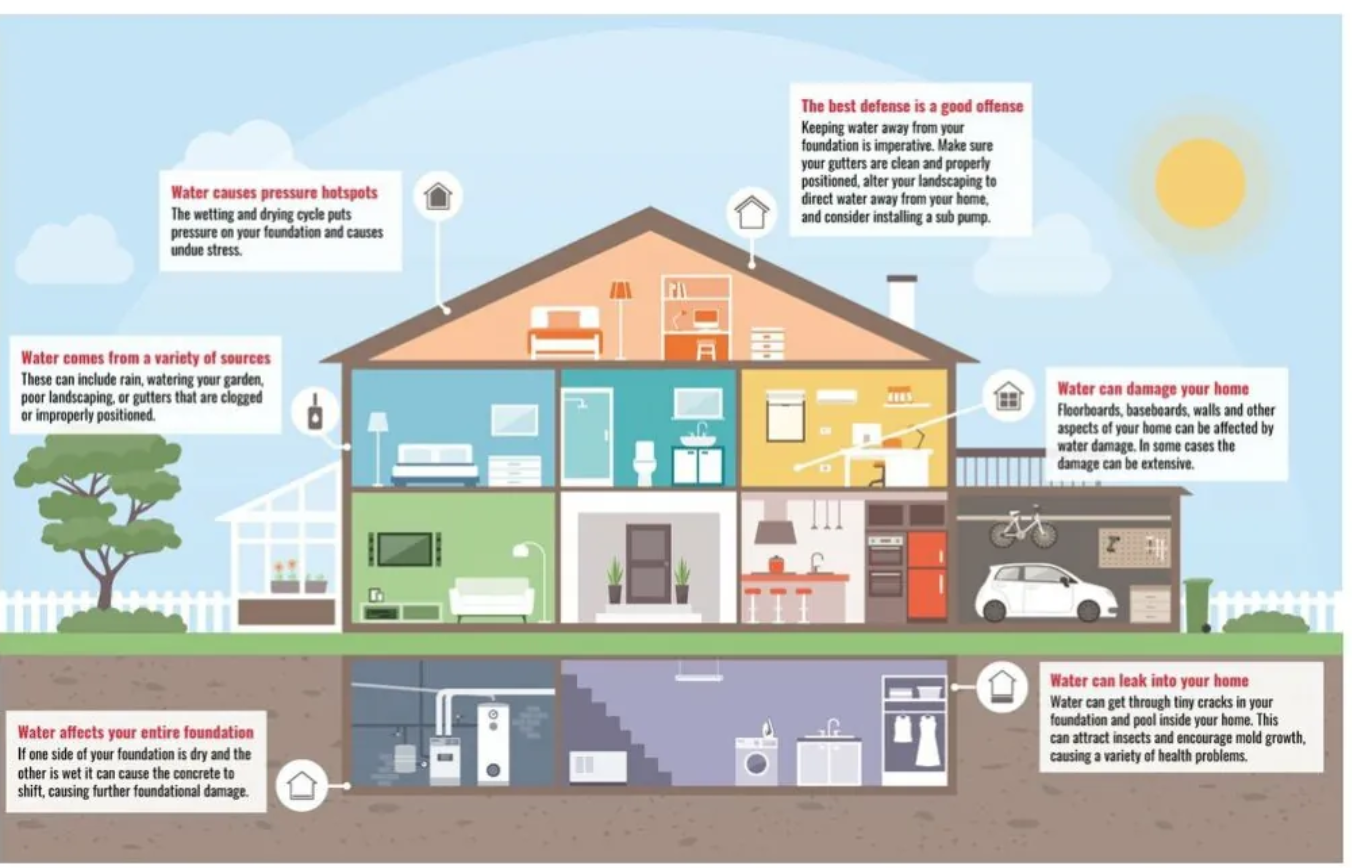
Early summer storms can create long periods of drought, only to later be interrupted by sudden and intense rainfall. Although the intense rains can be refreshing, they can also reveal drainage issues that have been hiding on your property as a result of the dry spell. One of the main issues homeowners begin to experience in June is the accumulation of standing water around the foundation of the home. While it may seem like a minor inconvenience, it is a warning sign of the potential for serious problems related to moisture and the integrity of your home.
To understand the complexities of this issue, you need to understand the interaction of the intensity of the rainfall, the behavior of the soil, the grading of the yard, and the roof drainage systems.
How Sudden June Storms Affect Soil Saturation
In many places around the world, June marks the start of the rainy season and the beginning of almost daily thunderstorms. A hallmark of this period is the arrival of storms that are capable of dumping a large amount of rainfall in a very short amount of time. An abrupt change in the moisture level of the soil can result in erratic behavior of the soil.
Dry soil can actually repel water. Compaction of the soil and the formation of a crust on the top of the soil can cause water to run off laterally, instead of being absorbed and dispersed by the soil. This can lead to water pooling in the low spots around the house.
The moisture in the soil can also be uneven. It is common for the top layers to become dry, while lower layers remain moist and compact. These layers of varying moisture can contribute to poor drainage and surface water pooling around the foundation.
Why Awareness of Drainage (Including Maintenance Costs) is Important
Many homeowners learn too late that minor drainage problems can become major issues by the time the rainy season arrives. A good way to minimize the risk is to routinely maintain features that control water flow away from the home, such as gutters and downspouts.
For example, if you are a homeowner in Olympia, knowing the gutter cleaning cost in Olympia can help you determine if you can afford to maintain and clean gutters before the rainy season, as clogged gutters can lead to water overflowing and falling directly against the home’s foundation. This can result in increased saturation and standing water in the earth around the home in vulnerable areas.
Seasonal drainage issues are most problematic during the early summer, as sudden storms can occur before the drainage system has a chance to reset from normal dry conditions.
Issues with Water Direction and Improper Grading
Foundation water problems can often go untreated due to an inability to recognize the issue as improper grading. When rain falls, the ground around the home should be sloped away in order to allow water to be naturally guided away. Landscape shifts can disrupt proper grading over the years.
Dips near the foundation can be created by soil settling and shifting, as well as foot traffic and landscaping over a period of time. Low points can collect large amounts of water during a rain storm.
In addition, some landscaping features can unintentionally trap water when they have absorbed a good deal of moisture and don’t allow any water to drain to the surrounding soil.
The Importance of Gutters and Concentrating Roof Runoff
Gutters channel roof runoff away from the house; however, gutters become ineffective when they become congested with debris, dirt, or leaves. When this happens, rainwater does not get routed to the downspouts, and instead, it overflows and spills over the gutters’ edges.
The overflow typically lands just above the foundation. Washouts from the concentrate can lead to soil saturation and standing water, especially during the heavy thunderstorms that occur in June.
Blocked downspouts can also lead to these problems. The water that should be routed away from the house can discharge right next to the house and increase the moisture load on the foundation.
Home Drainage Problems That Should be Addressed Immediately
The discharge of standing water is the most easily seen problem with drainage. However, there are other problems that are not as easy to see that can also indicate drainage problems such as:
– Remaining damp soil surrounding the foundation after days of no rain
– Small cracks in basement walls or along the edges of the slab
– Odors that are musty in the lower levels of the home
– Stains that are water spots on the surface of the foundation
– Patches on the lawn that are soggy and remain so longer than other surrounding patches
These problems become worse after a series of drainage issues have occurred.
How Your Landscaping Affects the Drainage on Your Property
Your drainage system can be adversely impacted by the design of your landscaping. While it is certainly appealing to have flower beds, stone borders, and retaining walls, they can block drainage paths.
Runoff increases with hardscaped surfaces like patios and walkways due to a lack of soil absorption. During a storm, water that would otherwise seep into the soil is pushed to the edges of the soil, often near the foundation. Water that would otherwise be absorbed and used by the soil instead begins to collect and pool.
It’s true that mature trees and shrubs efficiently absorb moisture, however, they can also create channels in the soil that begin to easily collect moisture.
Effects of Soil Expansion and Contraction
Soil is in constant motion due to the shifts that occur from the consistent drying and moistening of the soil. The expansion and contraction of soil due to moisture is particularly pronounced in the summer when storms begin to occur with greater frequency.
When water moves into dry soil, the soil expands to accommodate the growing volume. This will result in shifting of the soil near the home. These shifting will result in redirecting water to the foundation of the home instead of away from it.
The expansion and contraction of the soil will create dips and worsen the soil’s ability to drain moisture.
The Importance of Early Action
Long term damage to the home’s foundation from standing water is more costly to fix than addressing the standing water. The water pooling near the home will damage the concrete foundation, increase humidity and encourage the growth of mold.
These issues can easily be mitigated through maintaining gutters, extending downspouts, and changing the grading of the soil. There are also changes to landscaping that can be done to influence the movement of water following a heavy rainfall.
Practical Steps Homeowners Can Take
Reducing standing water does not always require large scale changes. Some problems can be solved with smaller adjustments to drainage. These include:
– Making sure downspouts empty water away from the home
– Clearing gutters in anticipation of rain
– Using compacted soil to fill the dips close to the home
– Making sure water is not being trapped against walls by mulch
– Checking the slope of the yard after heavy rains to see if water is collecting in any new areas
Recurring evaluations after a rainfall help identify water movement patterns to prevent them from becoming a more serious issue.
Final Thoughts
Water pooling near a home’s foundation after storms in the early summer is likely the result of many overlapping problems as opposed to a single issue. Landscaping, gutter systems, August rains, and the swelling and drying of soil all contribute to the movement of water on a property.
Homeowners can develop a better understanding of the problems by learning how the different factors are related. This understanding combined with consistent maintenance helps avoid the costly foundation repairs that are caused by the chronic drainage problems.
