

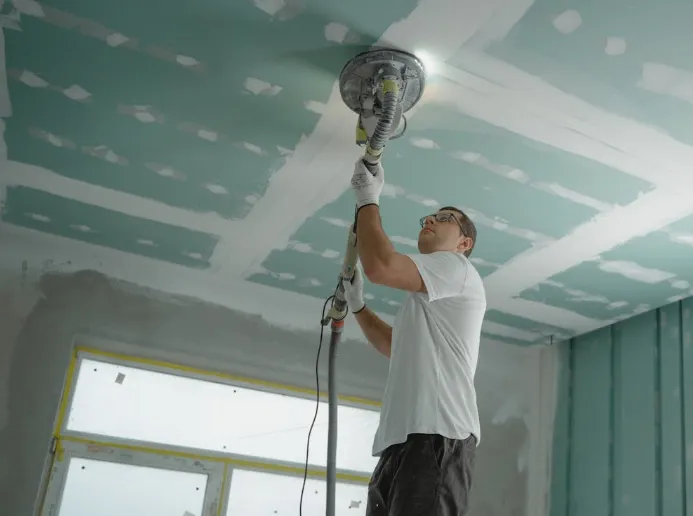
Thinking about getting rid of your old Artex ceiling?
The swirls and stipple effects were so popular in the 70’s and 80’s. Now, 30 years later, most of us can’t stand looking at them anymore! The only issue is that…
Scraping Artex isn’t as simple as it sounds. In fact, if your ceiling was textured before 1999, there’s a very high chance it contains asbestos. In this comprehensive guide, we’ll cover everything you need to know about safe Artex removal and how much it all costs.
Ready to dive in?
What you’ll learn:
- What Is Artex and Why Does It Contain Asbestos
- How to Test Your Artex for Asbestos
- Complete Artex Removal Costs and Price Breakdown
- Safe Removal Methods You Should Consider
What Is Artex and Why Does It Contain Asbestos
Artex is a textured coating that was commonly used on ceilings and walls around the UK. It became really popular because it allowed anyone to create decorative finishes without having to be a plastering expert.
Here’s what most people don’t know:
Artex contained white asbestos from the 1960s until 1984. The asbestos fibres were mixed in to make up around 1-4% of the coating. They helped strengthen and harden the product.
Asbestos Artex production was stopped in 1984, but it continued being used up until the UK-wide ban in 1999. This means if your ceiling is textured and was installed before 2000, it’s a good chance it contains asbestos.
Industry statistics show that 17% of Artex samples tested have been found to be positive for asbestos. That’s 1 in 5 textured ceilings having the deadly mineral.
Dealing with potential asbestos in your home is not something to take lightly. Getting expert advice from artex removal specialists is absolutely critical. Professionals can assess your unique situation and give you an accurate price based on your ceiling’s condition and area.
The risk with asbestos-containing Artex isn’t so much having it on your ceiling. The real danger is if you drill into it, sand it, or start removal. That’s when microscopic asbestos fibres get released into the air.
These fibres are invisible to the naked eye and have no smell. If you inhale them, they get stuck in your lungs and can’t be coughed out. Over the years — even decades later — exposure can cause deadly diseases like mesothelioma, lung cancer, and asbestosis.
The statistics around asbestos-related diseases are staggering. Over 5,000 people die each year in the UK from exposure.
How To Test Your Artex for Asbestos
Can you visually identify if your Artex contains asbestos?
Nope. Asbestos Artex looks the same as modern asbestos-free products. You need professional testing to know for sure.
If your property was built or renovated before 2000, the likelihood of asbestos is high. Properties built after 2000 should be asbestos-free, but you can still get it tested just to be sure.
Here’s how to test your Artex for asbestos:
Professional asbestos consultants will visit your home and take samples from a number of different spots on your ceiling. They need samples from multiple areas because Artex isn’t a homogeneous product.
The samples are then sent to an accredited lab to be analysed. It typically takes a few days to get results. If asbestos is found, the lab report will detail the type and percentage.
Artex Removal Costs and Price Breakdown
Ok, I’m going to be honest with you here…
Artex removal costs can vary wildly based on whether your ceiling contains asbestos or not. Normal Artex removal is between £8-£15 per square metre. Asbestos-containing Artex? It’s a whole different ball game, with costs of £20-£50 per square metre.
Here’s why there’s such a huge difference in costs:
Handling asbestos requires specialist contractors, personal protective equipment, negative pressure work areas, and hazardous waste disposal. All of these safety requirements add to the price.
To give you an idea, here are the average prices for an average-sized room (15 square metres):
- Non-asbestos Artex = £120-£225
- Asbestos Artex = £300-£750
Whole house removal will average around £2,000 but could easily be higher depending on how big your property is.
There are also a few other costs you should take into consideration:
- Asbestos testing = £50-£150
- Replastering your ceiling after removal = £15-£25 per square metre
- Repainting = £8-£12 per square metre
- Asbestos waste disposal = £50-£150
Asbestos presence makes a huge difference to the complexity and cost of the job. But when it comes to asbestos, don’t ever think about cutting corners just to save a few quid.
Safe Removal Methods You Should Consider
Removing Artex is not the only way to deal with a textured ceiling. In fact, complete removal isn’t always necessary.
Encapsulation
Encapsulation is a way of covering up your Artex rather than removing it. Skim plastering over Artex or covering it with plasterboard all count as encapsulation. This seals the asbestos fibres in place and creates a nice smooth modern finish.
The Pros:
- Much cheaper than removal
- Quicker time frame
- No risk of disturbing asbestos fibres
The Cons:
- Asbestos left in your property
- Need to be careful with future work
- May lower property value if you have to disclose to buyers
Professional Removal
The other option is to use professional contractors who know what they are doing when it comes to asbestos. Safe removal of Artex from your ceilings can be done by trained professionals. The Health & Safety Executive say the majority of Artex removal work does not require a full asbestos licence. But workers must have Category B asbestos training if they are not licensed.
Asbestos contractors will follow strict protocols when removing your ceilings including:
- Sealing the work area with plastic sheeting
- Wearing proper respiratory protection
- Wetting down the Artex to stop fibres from becoming airborne
- Double-bagging waste in UN-certified asbestos bags
- Hiring a skip for the disposal of asbestos waste
- Transporting materials to a licensed disposal facility
Professional contractors have the experience, training, and equipment to do the job right. Don’t even think about DIY when it comes to asbestos. Even if you legally can in your own home. I repeat, even in your own home!
One mistake while DIY-ing Artex removal could expose you and your loved ones to a killer material. Who knows what the consequences might be 30 or 40 years down the line.
If your Artex does not contain asbestos, DIY removal is possible and more feasible. You still need to take precautions and wear proper dust masks and protective clothing. But Artex removal doesn’t have to be hard work if you take your time.
Final Decision Time
In the end, removing Artex can give your ceilings a much-needed makeover. You can completely modernise the look and feel of your home. But the safety of you and your family comes first. Before you start ripping down ceilings, take a step back and…
- Get a professional to test for asbestos
- Decide what you really want to do (removal, encapsulation or leaving it)
- Get multiple quotes from qualified contractors
- Check that contractors have the right training and insurance
The money you spend on proper Artex removal is money well invested. You’re increasing your property value, improving the look of your home, and most importantly, protecting the health of your family.
Cutting corners when it comes to asbestos is not worth it. You never know the consequences of improper removal. They can last a lifetime.
