
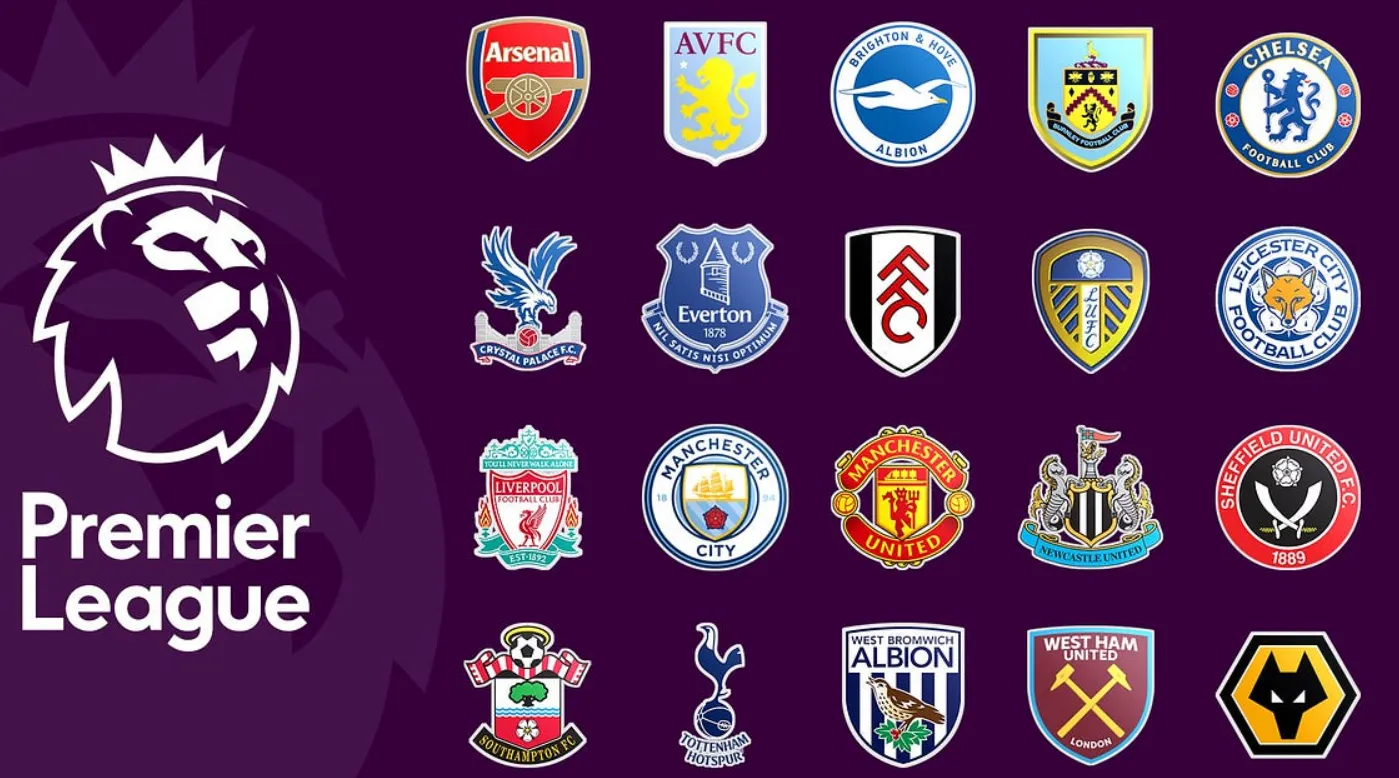
In the 2020/2021 Premier League, some fixtures were far more likely than others to finish level because of how evenly matched the sides were, how cautiously they approached risk and what they needed from the table at that moment. Treating draws as a predictable outcome in certain conditions, rather than as random noise, allowed bettors to build pre‑match logic around when “X” made more sense than forcing a side.
Why focusing on draw‑prone matches was reasonable
Draws in top leagues rarely distribute evenly; some teams accumulate significantly more than others over a season because of their style, quality balance and game‑state preferences. In 2020/2021, mid‑table and lower‑mid‑table clubs such as Brighton, Fulham and West Brom stood out in draw counts relative to their total matches, underlining that repeated stalemates were part of their season story, not isolated flukes. From a betting standpoint, those profiles suggested that, in certain matchups, the probability of a draw was structurally higher than market default assumptions that often emphasised wins and losses.
How team draw statistics framed the initial short‑list
The most straightforward starting point was to identify sides that ended the campaign with above‑average draw totals. Data for 2020/2021 shows Brighton, Fulham and West Brom among the teams with the highest number of draws across 38 games, while clubs in clearer boom‑or‑bust roles posted fewer stalemates. That imbalance came from both attacking and defensive behaviour: Brighton and Fulham frequently created and conceded at moderate levels, leading to tight scorelines, whereas some relegated sides swung between heavy defeats and occasional wins with fewer draws.
However, raw draw counts alone did not tell you which fixtures would repeat the pattern. A team might draw often because it spent much of the season facing stronger opponents where it defended deep, or because it lacked cutting edge to turn dominance into wins. Understanding why a club landed on so many draws—conservatism, wastefulness, or a mix of both—was crucial to deciding whether those tendencies would carry into a specific matchup rather than assuming last season’s numbers would simply project forward into every game.
What kind of team styles naturally produced more stalemates
Several tactical and stylistic features tended to increase the chance of matches ending level in 2020/2021. Teams with solid defensive structures but limited attacking firepower often found themselves in low‑scoring games where one goal in either direction decided everything, and where 0–0 or 1–1 results became common when finishing variance did not break their way. These sides sat in the category of “hard to beat, hard to trust,” producing many fixtures where the expected goal difference between the teams was small and neither side had a reliable mechanism to consistently create clear chances.
Another draw‑friendly style came from possession‑heavy teams who controlled territory and shots but did not translate that into enough goals, either through poor finishing or an insistence on cautious structures that limited risk. Brighton’s 2020/2021 season was a classic example: underlying metrics suggested mid‑table quality, yet the actual table showed them in relegation danger for long stretches, partly because many games stalled at one goal each. Matches where such a side faced another organised team with similar defensive competence but limited cutting edge often tilted toward stalemates unless set pieces or individual brilliance broke the deadlock.
Conditional scenario: balanced mid‑table clashes vs top‑vs‑bottom matches
Draw probabilities looked very different depending on whether teams were closely matched or separated by a clear quality gap. When two mid‑table or lower‑mid‑table sides with similar goal differences and moderate scoring records met, the structural expectation leaned toward small margins and therefore a higher chance of level outcomes. In those games, both clubs could accept a point as a tolerable outcome, especially away, which encouraged risk‑managed approaches that protected against defeat more than they chased victory.
By contrast, when a top‑tier side met a struggling team with a significantly worse goal difference and defensive record, draw chances largely depended on whether the underdog could sustain resistance or score on the break. While individual matches certainly did finish level, the baseline expectation from long‑term stats—strong teams scoring far more and conceding far less—meant that draws were less structurally likely than in balanced pairings. Recognising this conditional split kept bettors from over‑rating draw prospects simply because one team was known to “draw a lot” in different contexts.
How the table and incentives raised or lowered draw probabilities
The league table at specific points in 2020/2021 had a direct impact on how attractive a draw was for each team, particularly in the second half of the season. Mid‑table clubs with little to gain from reckless pursuit of wins often leaned into risk‑averse strategies in matches against similar opponents, content to maintain distance from the bottom and accept a point if the game remained tight. In those situations, the cause–effect chain ran from table stability to cautious tactics to higher draw likelihood, especially when neither side possessed a consistently decisive forward.
Relegation and European races created more complex incentives. For sides in relegation battles, a draw against a stronger opponent could be valuable, while a draw against a direct rival might be seen as insufficient, prompting more open play and reducing stalemate probability. Conversely, Champions League contenders sometimes weighed the cost of a single defeat as greater than the cost of dropping two points, especially away from home, and adapted their risk appetite accordingly. Looking at how many points a draw was “worth” in context, and how that translated into tactical choices, turned the table from a static list into a live indicator of draw‑friendliness for each fixture.
Using simple pre‑match checks to narrow down likely draws
To move from general patterns to specific 2020/2021 fixtures, many bettors used a short sequence of checks before considering the draw seriously. The logic often started with comparing each team’s number of draws and goal differences, then checking goals scored and conceded to gauge how often their matches stayed close. If both clubs showed modest scoring totals, relatively tight defences and several draws already, the case for a draw strengthened when they met each other rather than sides at the extreme ends of the table.
From there, the next step was to consider the match venue and recent form. Home advantage, though reduced in a season with limited crowds, still mattered in how managers weighed risk: a home side in poor form facing a similar‑level visitor might prioritise avoiding another defeat, while the away side might treat a point as acceptable, both nudging toward cautious equilibrium. Finally, known injuries to key attackers or creative players raised the chance that both teams would struggle to turn half‑chances into goals, supporting the view that a low‑scoring, draw‑prone game state was more likely than usual when adjusted for odds.
How a sports betting service environment influenced draw selection
In practice, the way options were framed on a digital service shaped how often bettors actually chose the draw, even when analysis supported it. Many interfaces emphasised home and away wins visually, with the draw price presented as a lesser, central option that users were psychologically inclined to skip. On a modern sports betting service, where multiple sports, accumulators and promo‑boosted favourites might surround a given match, the draw often felt like the least exciting choice, particularly for casual bettors conditioned to back “someone” rather than neutrality.
Within that context, someone looking for draw‑friendly Premier League 2020/2021 fixtures through ยูฟ่า168 had to intentionally override the interface’s subtle push toward win‑focused bets. That meant entering each match with a prior expectation—based on stats, table position and incentives—about whether the draw was a serious contender, then checking if the offered price reasonably reflected that probability. Only when the numbers suggested the draw was underbet compared with the real chance should it move from an abstract possibility to an active selection; otherwise, it remained a reference point to gauge whether side prices were inflated by underweighting stalemate risk.
Where draw‑based reasoning broke down
Even in a season where certain teams drew frequently, treating the draw as a default in their fixtures quickly ran into limits. Tactical changes—new managers, shifts in formation, or a switch in pressing intensity—could push a previously cautious side toward more aggressive play, altering scoring distributions and reducing stalemate rates. Injury returns could also change dynamics; the reintroduction of a clinical striker or a key creator often turned the same tight games that once finished 1–1 into 2–1s and 3–1s, breaking historical draw patterns rooted in weaker attacking options.
Randomness also plays a larger role in draws than in some other outcomes, because a single deflection, red card or penalty can turn a level game into a decisive result with little warning. Over a full season, those moments average out enough to produce clear draw tendencies for certain teams, but on a match‑by‑match basis they still inject significant uncertainty. For bettors, this meant treating draws as value opportunities only when backed by both structural factors and fair prices—not as a low‑variance alternative to sides, but as one more outcome whose edge could disappear quickly if context changed.
Table: Structural indicators that a match is draw‑friendly
To keep decisions systematic, it helps to group the main structural indicators of draw‑prone fixtures into a simple reference. The table below summarises some of the most relevant 2020/2021‑style signals and their typical implications.
| Indicator | What it usually meant on the pitch | Effect on draw probability |
| Both teams with high season draw counts | Frequent tight games, limited separation in results | Increases base chance of stalemate |
| Similar goal difference and mid‑table positions | Comparable strength, few clear mismatches | Supports balanced, low‑margin outcomes |
| Low goals scored and low goals conceded for both teams | Conservative tactics, limited cutting edge | Favors 0–0, 1–1 outcomes over high‑scoring wins |
| Table context where a point suits both sides | Incentive to avoid defeat rather than chase risky win | Encourages risk‑averse game plans |
| Missing key attackers or creators on both teams | Fewer high‑quality chances, reliance on set pieces | Increases likelihood that neither side pulls away |
Using these indicators together created a more disciplined approach than chasing the draw price whenever it looked high. When at least three or four of them applied to the same match, the structural case for a draw was stronger than in fixtures where only one factor held. Conversely, when a match ticked none of these boxes—a clear favourite, high‑scoring styles, strong incentives to win—the draw could still happen but lacked a rational foundation as a preferred outcome.
How casino‑style contexts distorted discipline around draws
Finally, the broader gambling environment influenced how easily bettors could stick to draw‑based logic. When football betting sat on the same account as faster, higher‑frequency activities, moving into more casino‑driven contexts encouraged a mindset of action and resolution rather than patience. That shift made it psychologically harder to accept draw bets that might feel “boring” or to pass on matches where the numbers did not support stalemates, because recent short‑cycle outcomes were constantly in mind.
By keeping pre‑match Premier League analysis separate from those impulses—treating draw identification as a slow, statistical exercise rather than a way to “get involved” in every televised game—bettors gave themselves a better chance of acting only when structural factors in 2020/2021 aligned. In that way, draws became part of a broader value‑based toolkit, not a refuge for indecision or a reaction to wider gambling swings.
Summary
Identifying Premier League 2020/2021 fixtures with a high chance of ending in a draw depended on reading structure, not guessing at randomness. Teams such as Brighton, Fulham and West Brom accumulated large numbers of stalemates because their styles, attacking limits and defensive competence kept matches tight, especially against similarly ranked opponents. When those profiles intersected with balanced goal differences, table incentives favouring caution and weakened attacking line‑ups on both sides, the draw shifted from an overlooked third outcome into a logical pre‑match position—provided the price reflected its true probability rather than assuming every game must produce a winner.
