

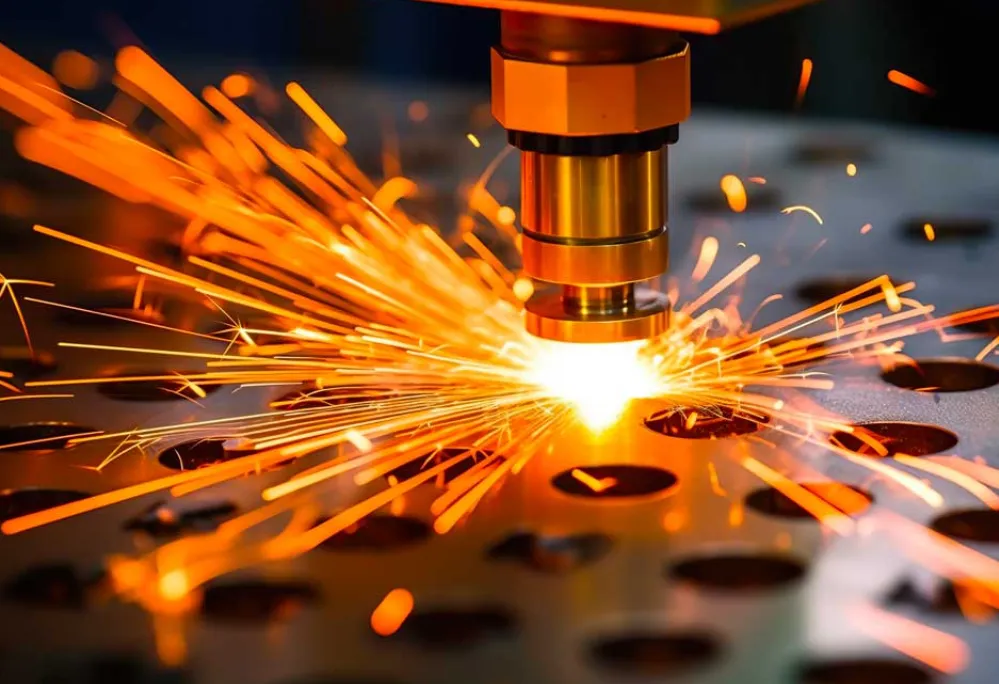
Metalworking is an essential backbone of industries ranging from construction to aerospace. High-quality metal fabrication ensures reliability and precision, making it vital for project success. But what’s next for this dynamic industry? With a wave of innovation reshaping metal fabrication, businesses are discovering new ways to improve quality, efficiency, and accuracy.
This article explores six cutting-edge solutions leading the metalworking revolution. Read on to learn how these advancements are making a difference.
1. Automation in Metal Fabrication
Automation is transforming the metalworking industry by boosting productivity and minimizing errors. Automated machines, like CNC (Computer Numerical Control) tools, ensure precision with minimal human intervention. From cutting and milling to bending and welding, automation accelerates manufacturing processes without sacrificing quality.
For instance, CNC tools follow pre-programmed designs, reducing inaccuracies and increasing consistency. This is particularly beneficial for industries that rely on high repeatability for mass production, such as automotive manufacturing. Businesses adopting automation in metal fabrication report up to a 30% reduction in production time, making it a game-changer for efficiency.
2. Additive Manufacturing for Custom Components
Additive manufacturing (or 3D printing) is no longer limited to prototypes. This technology is now a staple in custom metal fabrication, enabling the production of intricate, lightweight components. Using materials like stainless steel and titanium, it creates parts layer by layer for unmatched design flexibility.
Aerospace and healthcare companies are already using additive manufacturing for parts like turbine blades and titanium implants. The process reduces material waste by up to 90% compared to traditional subtractive manufacturing methods, making it more eco-friendly and cost-effective.
3. Advanced Precision Welding and Fabrication
Welding and fabrication have always been core processes in metalworking, but modern techniques are taking them to the next level. Laser welding, for example, improves the precision and strength of welds, especially for thin metals. Similarly, robotic welding systems ensure uniformity and allow businesses to handle complex projects with ease.
Fabrication shops specializing in precision welding and fabrication are setting new industry standards by combining these advanced techniques with traditional expertise. This creates components that meet the highest specifications in fields like energy, marine, and heavy equipment manufacturing.
4. Smart Materials for Enhanced Durability
The emergence of smart materials in metalworking is redefining durability and adaptability. Shape-memory alloys and self-healing metals are enabling industries to create products that adapt to various environments or even repair themselves when damaged.
For example, shape-memory alloys used in construction and medical implants can return to their original form after deformation. Meanwhile, self-healing metals utilize embedded microcapsules or nanoparticles to repair cracks, increasing the lifespan of components in extreme environments.
These materials are particularly useful in industries like construction, where durability and resilience are critical.
5. IoT Integration for Smarter Operations
The Internet of Things (IoT) is playing a major role in modernizing the metalworking sector. By integrating IoT sensors into equipment and machinery, companies can monitor operations in real time.
IoT-driven systems provide insights on machine performance, predict maintenance needs, and even optimize workflows. For instance, a fabrication shop using IoT-embedded CNC machines can track accuracy metrics and proactively address potential issues before they cause delays.
This not only minimizes downtime but also enhances overall operational efficiency. Businesses leveraging IoT see up to a 20% increase in equipment reliability, according to industry reports.
6. Sustainable Practices in Metalworking
Sustainability is becoming a critical focus across all industries, including metalworking. Processes like waterjet cutting and hybrid manufacturing are reducing energy use and waste in fabrication. Similarly, the increased use of recycled metals not only supports environmental goals but also lowers production costs.
For example, waterjet cutting machines use high-pressure water mixed with abrasives to cut through metal without generating hazardous heat or fumes. This technique conserves energy and avoids the harmful byproducts associated with traditional plasma or laser cutting.
Sustainability is no longer an option but a necessity. Companies that invest in sustainable metalworking practices are not only reducing their ecological impact but also attracting eco-conscious clients.
Final Thoughts
The evolution of metalworking technologies is reshaping how industries operate. From automation and additive manufacturing to sustainable practices, innovative solutions are making the sector more efficient, precise, and environmentally friendly. By adopting these advancements, businesses will stay competitive in a rapidly changing landscape.
To learn more about how you can benefit from advancements like precision welding and fabrication, explore services that incorporate these cutting-edge technologies into every project. Elevate your operations today with modern metalworking solutions.
