

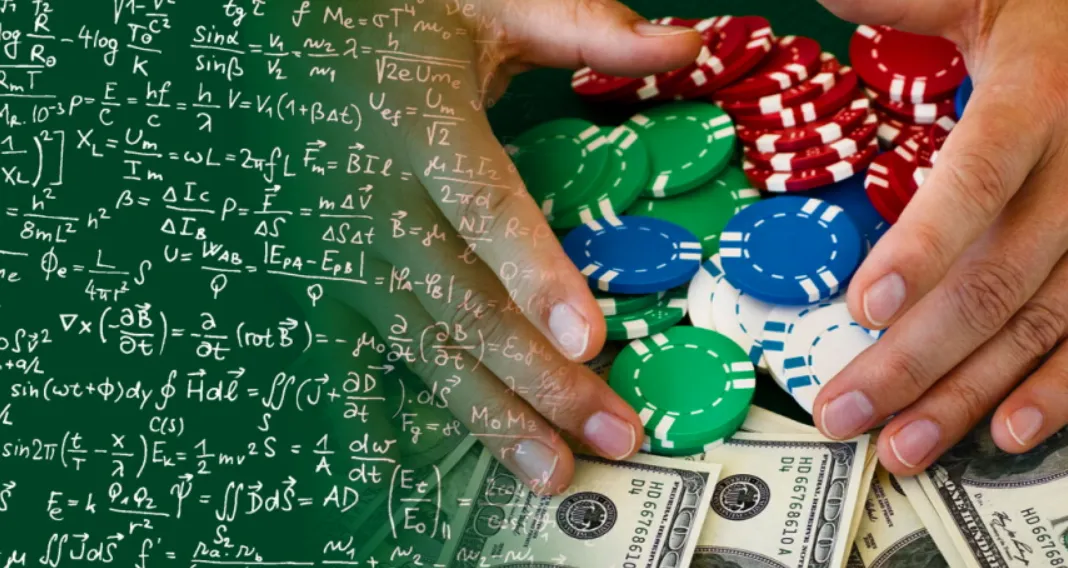
Slot games are often described as games of chance, but behind the spinning reels lies a foundation rooted in probability theory. Every outcome, whether it’s a small win, a jackpot, or a losing spin, is the result of probability at work.
For casual players, slots may seem random without explanation. For informed players, however, probability offers clarity—it shows why slots behave the way they do, why wins are unpredictable, and why no strategy can “force” a payout.
To fully understand this relationship, we first need to grasp the basics of probability itself.
Basics of Probability Theory
Probability is the branch of mathematics that studies the likelihood of events occurring. Expressed as a ratio, fraction, or percentage, it answers questions like: What are the chances of flipping heads on a coin? or What is the probability of rolling a six on a die?
In simple terms:
- Probability of an event = (Number of favorable outcomes ÷ Total possible outcomes)
Applied to casino games, probability explains the odds of winning hands in poker, hitting red in roulette, or lining up symbols on a slot machine.
Understanding these principles is the foundation for interpreting randomness in slot outcomes.
How Probability Shapes Slot Machine Outcomes
Slot machines are carefully designed to apply probability theory to gameplay. Every symbol on the reels, every combination, and every payout structure is rooted in mathematics.
Here’s how:
- Each spin has a defined set of possible outcomes.
- The probability of landing specific combinations is built into the game’s design.
- Developers use this math to balance entertainment with fairness.
But players don’t calculate probabilities directly. Instead, probability is applied through Random Number Generators (RNGs).
Role of RNG in Probability
The RNG is a software algorithm that generates thousands of random numbers per second. Each number corresponds to a reel position. When you press spin, the RNG “locks in” a number, creating a result.
This process applies probability by:
- Ensuring each spin is independent.
- Making outcomes unpredictable.
- Guaranteeing fairness over millions of spins.
RNG is where abstract probability becomes tangible slot gameplay.
RTP as a Probability-Based Metric
Return to Player (RTP) is one of the most important slot metrics, and it’s entirely based on probability.
- RTP is the theoretical percentage of total wagers a slot returns to players over the long term.
- For example, a 96% RTP means that out of $100 wagered, players can expect $96 back over millions of spins, with $4 kept by the house.
This figure is calculated using probability models and extensive simulations. But RTP alone doesn’t tell the whole story—volatility completes the picture.
Volatility and Its Link to Probability
Volatility, also called variance, describes how probability distributes wins in a game.
- High-volatility slots: Rare wins but large payouts. Probability assigns a low likelihood to big wins, but when they occur, they are substantial.
- Low-volatility slots: Frequent wins but smaller payouts. Probability assigns higher chances to small rewards.
In this way, volatility is a practical expression of how probability distributes risk and reward in slot design. But there’s another key factor tied to probability: hit frequency.
Hit Frequency and Probability in Practice
Hit frequency measures how often a slot produces any winning outcome.
- Example: A hit frequency of 20% means that, on average, 1 in 5 spins results in a payout.
Probability governs this frequency by defining the likelihood of landing winning combinations.
The important distinction is this:
- Probability (math): Defines likelihood.
- Hit frequency (player perspective): Shows how that math translates into real gameplay.
Together with RTP and volatility, hit frequency gives players a more complete picture of what to expect.
Common Misconceptions About Probability in Slots
Even with clear math, myths about slot probability persist:
- “Machines are due for a win.” – False. Probability resets every spin; past outcomes don’t affect future ones.
- “Patterns can predict results.” – False. RNG ensures unpredictability; no pattern exists.
- “Big bets change probability.” – False. Bets may increase payouts but not the mathematical odds of winning.
By understanding probability, players can avoid these misconceptions and play with confidence.
Using Probability Knowledge to Choose Games Wisely
Probability is more than theory—it’s a practical tool for making smarter gaming choices. Players can use it to:
- Pick higher RTP slots: Better long-term returns.
- Match volatility to budget: Low volatility for longer play; high volatility for jackpot chasers.
- Interpret hit frequency: Choose between frequent wins or high-risk, high-reward play.
High-Probability Games vs High-Risk Games
- High-probability games: Frequent but smaller payouts, ideal for casual players or those with smaller bankrolls.
- High-risk games: Rare wins but potentially life-changing payouts, appealing to risk-takers with patience and budget.
Choosing wisely means aligning mathematical reality with personal goals. But to do this safely, players must use trusted platforms.
Trusted Platforms for Probability-Based Play
Not every casino publishes or respects slot metrics. Trusted platforms ensure that RTP, volatility, and hit frequency are transparent and verified by regulators.
Exploring Reliable Options
- 747ufa – Perfect for readers who enjoy both football content and casino services.
- บาคาร่า – Ideal for players who want to explore strategy-based games alongside probability-driven slots.
By sticking with secure, regulated platforms, players ensure that probability truly governs outcomes, not hidden manipulation.
Conclusion – Probability as the Key to Understanding Slots
Slot games may appear to run on luck, but their foundation is deeply tied to probability theory. From the basics of chance to RNGs, RTP, volatility, and hit frequency, every aspect of slot design is guided by mathematics.
Separating facts from myths helps players avoid misconceptions like “due machines” or predictable patterns. More importantly, applying probability knowledge allows players to make smarter choices, align games with their budgets, and set realistic expectations.
In the end, probability doesn’t guarantee wins—but it gives players clarity. With this understanding, slots become not just games of chance, but games where informed choices lead to more responsible and enjoyable play.
