

Florida’s beauty lies in its delicate balance between land and water. But that same balance is now under threat. As sea levels rise and rainfall patterns shift, one of the state’s most overlooked systems—the septic tank—is quietly becoming a major environmental and public health concern.
For decades, septic systems have provided an affordable, practical wastewater solution for millions of Florida homes, particularly in rural and coastal communities. Yet the ground beneath these systems is changing. As groundwater levels climb closer to the surface, septic tanks are struggling to perform the way they were designed.
The result? What once was an invisible, underground convenience is becoming a front-line issue in Florida’s environmental future.
The Science Beneath the Surface
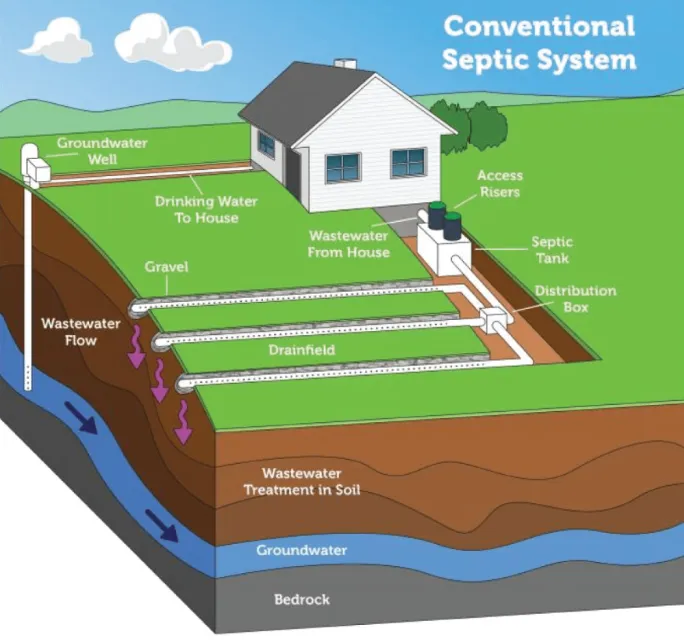
Septic systems rely on a simple concept: wastewater flows from the home into an underground tank, where solids settle and bacteria break down organic matter. The liquid effluent then filters through a drain field into the surrounding soil, where it’s naturally treated before reaching groundwater.
This process depends on having unsaturated, oxygen-rich soil between the drain field and the water table. But as sea levels rise, that critical separation is shrinking—or disappearing entirely.
When groundwater levels rise too high, effluent doesn’t have enough soil to filter through. Instead of being purified naturally, it can seep directly into groundwater, carrying nutrients, pathogens, and chemicals along with it.
In coastal and low-lying regions of Florida—such as Miami-Dade, Monroe, and parts of Lee and Sarasota Counties—this problem is no longer theoretical. It’s already happening.
The Environmental Cost
Florida’s waterways are among its greatest assets, but they’re also among its most vulnerable. Improperly functioning septic systems contribute significantly to nutrient pollution, particularly nitrogen and phosphorus, which feed harmful algal blooms.
These blooms—like the infamous red tide and blue-green algae—can devastate marine life, kill fish, and release toxins into the air. They also threaten the state’s economy, which depends heavily on tourism, fishing, and waterfront property.
According to a 2023 report by the Florida Department of Environmental Protection (FDEP), more than 2.5 million septic systems exist across the state, with many located in regions already facing high water tables. That means even a small percentage of failing systems can have a large cumulative impact.
The Human Health Factor
Beyond environmental damage, rising groundwater also poses a direct risk to human health. When septic systems flood, wastewater can back up into homes or contaminate private wells. This exposes residents to bacteria like E. coli, viruses, and other pathogens that can cause gastrointestinal illness or worse.
In communities that depend on private wells for drinking water, the proximity between septic drain fields and groundwater sources is especially concerning. What was once considered a safe distance decades ago may no longer apply under current conditions.
This changing reality has forced both homeowners and policymakers to rethink what “safe” means in the context of wastewater treatment.
Florida’s Response: Regulation, Innovation, and Responsibility
Recognizing the urgency of the issue, Florida has taken significant steps toward modernizing its septic oversight. The Clean Waterways Act, passed in 2020, marked a turning point in how the state manages wastewater and groundwater protection.
The law requires improved inspections, upgrades to advanced nutrient-reducing systems in vulnerable regions, and better coordination between health and environmental agencies. It also promotes the use of enhanced nutrient-reducing septic systems, which use specialized filters, media, or aeration to remove nitrogen more efficiently.
Yet, while these measures are critical, implementation remains challenging. Upgrading or replacing systems can be costly—often ranging from $10,000 to $20,000 per household. For many residents, especially in rural or low-income areas, those costs are prohibitive.
As policymakers debate funding and homeowners face new compliance deadlines, one thing is clear: maintaining outdated systems is no longer sustainable. The intersection of environmental necessity and economic reality has made wastewater management one of Florida’s most complex local issues.
That’s why understanding Florida septic tank requirements—from permitting to inspection to upgrade incentives—has become increasingly important for property owners seeking to future-proof their homes.
Innovation and the Future of Septic Design
The challenges posed by sea level rise are also driving innovation in wastewater technology. Engineers, environmental scientists, and startups are developing new systems designed to adapt to Florida’s changing landscape.
Some of the most promising solutions include:
- Aerobic Treatment Units (ATUs): These systems inject air into the wastewater to accelerate biological breakdown, improving nitrogen and pathogen removal before effluent reaches the soil.
- Performance-Based Treatment Systems (PBTS): Tailored to site-specific conditions, these systems use filters and sensors to optimize treatment based on soil, water table, and household usage.
- Cluster or Community Systems: Instead of individual septic tanks, multiple homes share a centralized advanced treatment system, offering efficiency and scalability in densely populated areas.
- Smart Monitoring Technology: IoT-enabled sensors can track water levels, flow rates, and system health in real time, alerting homeowners or authorities before problems escalate.
These innovations are redefining what decentralized wastewater management can look like in the 21st century.
What Homeowners Can Do
Homeowners play a crucial role in protecting Florida’s fragile water systems. While large-scale policy and technology changes take time, individual action can make a measurable difference.
1. Regular Maintenance – Septic tanks should be inspected every 2–3 years and pumped as needed. Routine maintenance extends lifespan and prevents costly failures.
2. Water Conservation – Reducing household water use eases pressure on the system, giving the drain field more time to absorb and filter wastewater.
3. Avoid Chemical Drain Cleaners – Harsh chemicals disrupt the natural bacterial balance inside septic tanks, reducing their effectiveness.
4. Know Your System’s Limits – Avoid driving or building structures over drain fields, which can compact soil and impair drainage.
5. Stay Informed – Regulations vary by county and water basin. Checking local guidelines can help homeowners remain compliant and environmentally responsible.
A New Definition of “Safe”
The word safe once meant that a septic system functioned without leaks, backups, or foul odors. Today, safety encompasses far more—it means protecting groundwater, maintaining ecosystem health, and ensuring public well-being amid changing environmental conditions.
Florida’s future depends on how well it adapts to the twin pressures of population growth and climate change. Updating septic infrastructure may not be as visible as building seawalls or restoring beaches, but it’s equally essential.
By embracing innovation, enforcing smarter regulations, and educating homeowners, Florida can turn its wastewater challenge into a model of sustainable adaptation.
Because in a state defined by its connection to water, what happens underground will always rise to the surface.
