

Few weekend projects deliver as much instant curb appeal and long-term savings as giving your asphalt driveway a fresh coat of sealer. Whether you’re fighting faded color or hairline cracks, learning the basics of driveway sealing puts you in charge of protecting one of your home’s biggest exterior investments.
This guide walks you step-by-step through evaluating, prepping, sealing, and maintaining an asphalt driveway. You will find real-world cost comparisons, safety must-knows, and the honest pros and cons of DIY vs. hiring a pro.
Why Seal Your Asphalt Driveway?
Sealing your driveway is one of the most effective preventive maintenance tasks a homeowner can perform. The benefits extend far beyond simple aesthetics, protecting your investment for years to come.
Regular sealing delivers measurable protection and financial benefits that compound over the life of your driveway:
- Extended Lifespan: A properly sealed surface can last up to 50% longer than untreated asphalt. Sealer acts as a shield against the elements that cause degradation.
- Moisture Barrier: Sealer fills surface voids, limiting water penetration. This prevents the damaging freeze-thaw cycles that widen small cracks into large ones.
- Curb Appeal: A rich, dark black finish restores the look of new asphalt, making your entire property look sharper. It also helps hide previous surface stains.
- Lower Long-Term Costs: Investing a small amount of time and money in regular sealing is far cheaper than paying for extensive repairs or a complete driveway replacement.
Assessing Your Driveway’s Condition
Before buying any materials, take a close look at your driveway’s current state. Most driveways with minor wear are excellent candidates for a DIY sealing project. Understanding when Liquid Rubber’s driveway sealing for asphalt surfaces is appropriate will help you make the right decision. Look for these common signs:
- Color fading from black to a dull gray
- Fine, spider-web, or block-pattern hairline cracks
- Minor raveling, where small pieces of sand and aggregate are loose on the surface
However, you should postpone sealing and consider professional help if you spot more significant issues:
- Widespread alligator cracking (interconnected cracks forming a grid)
- Sinking areas or potholes deeper than two inches
- A new asphalt installation is less than 6 months old, as it needs time to fully cure
Choosing the Right Driveway Sealer
The variety of sealers at the hardware store can be overwhelming, as each type has its own durability, finish, and cost. Understanding the options is key to a successful project.
For a visual walkthrough of the entire process, a detailed project guide on driveway sealing can provide photos and tips you can reference as you work.
Common Sealer Types
The table below compares the most popular sealer formulations based on performance characteristics and typical costs:
| Sealer Type | Durability | VOC Level | Finish | Typical DIY Cost/5 gal |
|---|---|---|---|---|
| Coal-Tar | High | High | Jet-black, glossy | $25–$35 |
| Asphalt Emulsion | Moderate | Medium | Satin-black | $20–$30 |
| Acrylic | High | Low | Deep-black, semi-gloss | $35–$50 |
| Bio-Based/Eco | Moderate | Ultra-low | Matte-black | $30–$45 |
Factors to Weigh
Choosing the right sealer depends on your regional climate, local regulations, aesthetic goals, and project timeline:
- Climate: Homeowners in freeze-thaw zones benefit from more flexible asphalt-emulsion or acrylic products that can expand and contract.
- Local VOC Rules: Many states now restrict or ban the use of high-VOC coal-tar sealers due to environmental concerns.
- Budget vs. Appearance: Acrylic sealers often cost more but provide a longer-lasting, deeper black finish.
- Dry-Time: If you need to use your driveway soon, look for fast-dry formulas that can be ready for traffic in under 24 hours.
Before You Get Started
Proper timing and preparation are critical for a durable finish. Pay close attention to the weather forecast and gather all your materials before you begin. Before you open the first container of sealer, confirm that conditions are optimal and your workspace is properly prepared:
- Weather Window: The ideal surface temperature is between 50°F and 90°F. Ensure there is no rain in the forecast for at least 24 hours before and after application.
- Humidity: Lower humidity is better for curing; aim for levels below 80%.
- Safety Gear: Always wear chemical-resistant gloves, eye protection, and old clothing. If you are using a spray applicator, an N95 respirator is recommended.
- Environmental Care: Use cardboard or plastic to block nearby storm drains. Never rinse leftover sealer into the gutter or street.
Preparing the Driveway Surface
The success of your sealcoating job is 90% preparation. A pristine surface allows the sealer to bond correctly and last for years, so do not rush these steps. Follow this systematic preparation sequence to ensure proper sealer adhesion and long-lasting results:
- Sweep away all loose debris, dirt, and leaves. Use a leaf blower to clear out tight corners and cracks.
- Treat and degrease any oil or gasoline spots with a specialized driveway cleaner and a stiff brush, then rinse thoroughly.
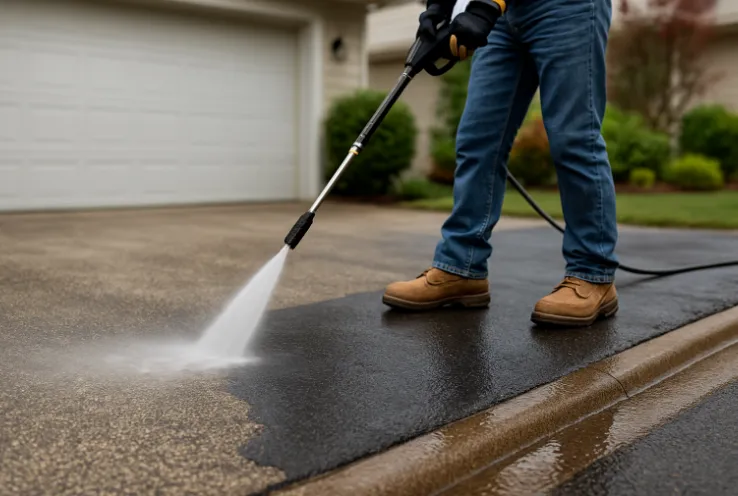
- Pressure-wash the entire surface to remove ground-in dirt and grime. Allow a full 24 hours for the asphalt to dry completely.
- Fill any cracks that are ½″ wide or less with a pourable crack filler. Smooth the filler level with the surface using a putty knife.
- Repair larger potholes with a cold-patch asphalt compound. Tamp it down firmly in layers until it is flush with the existing driveway, and let it cure.
- Do a final visual inspection. The surface must be completely clean and dry before you open the first bucket of sealer.
Step-by-Step Guide to Sealing Your Driveway
Applying driveway sealer requires precision, patience, and the right technique to achieve a professional-looking finish that will protect your pavement for years. Rushing through the process or skipping key steps can result in streaks, uneven coverage, and premature wear.
Follow this proven workflow to ensure proper product preparation, smooth application, and adequate curing time for a durable, attractive seal coat.
Mixing & Pouring
To ensure the solids are evenly distributed, turn the sealed bucket of sealer upside-down 24 hours before you plan to use it. When ready, open the bucket and stir thoroughly with a heavy-duty drill paddle attachment until it reaches a smooth, consistent texture.
Starting at the highest point of the driveway, pour an “S” shaped ribbon of sealer about two feet wide across the pavement.
Spreading Technique
The squeegee method offers the best control for new DIYers. Pull the puddle of sealer toward you in smooth, overlapping strokes, applying light pressure. Then, push the squeegee back over the area to even out the thickness to about 1/8″ wet.
For larger driveways, a ¾″ nap roller can be faster, but be sure to roll in one direction to avoid lap marks.
Edge-to-Center Workflow
First, use a 4″ trim brush to carefully cut in the borders of the driveway, protecting walkways and garage floors. Then, work in manageable sections from the edge toward the center, always maintaining a wet edge to blend each section seamlessly.
Plan your work so you do not paint yourself into a corner, and never stop in the middle of the driveway; finish a full pass to a logical seam.
Curing Times & Traffic Restrictions
Curing times depend heavily on temperature and sunlight. Be patient to avoid permanent tire marks on your new surface. Temperature plays a critical role in how quickly sealant cures; use these guidelines to determine safe timeframes for your climate:
| Air Temp | Light Foot Traffic | Vehicle Traffic |
|---|---|---|
| 50–60 °F | 24 hrs | 72 hrs |
| 61–80 °F | 12 hrs | 48 hrs |
| 81–90 °F | 6 hrs | 24 hrs |
Tip: Place empty buckets or caution tape at the end of your driveway to prevent accidental traffic from delivery drivers or visitors.
Professional vs. DIY: Which Is Right for You?
Deciding whether to do it yourself or hire a contractor comes down to time, budget, and desired results. Use this side-by-side comparison to evaluate which approach aligns best with your project constraints and expectations:
| Factor | DIY | Professional |
|---|---|---|
| Cost (2-car, 600 ft²) | $120–$180 | $300–$500 |
| Labor | High (6–8 hrs incl. prep) | Low |
| Equipment | Basic hand tools | Commercial spray rigs |
| Finish Quality | Good with care | Excellent, uniform |
| Warranty | None | 1–3 years typical |
Choose the DIY route if you enjoy hands-on projects, have a free weekend, and your driveway is in fair condition. Hire a pro when you are short on time, need a flawless cosmetic finish, or want the peace of mind that comes with a warranty.
Maintaining Your Newly Sealed Driveway
Consistent maintenance practices extend the life of your sealer, prevent costly repairs, and keep your driveway looking professionally finished year after year. Follow these essential upkeep guidelines to protect your investment:
- Re-seal Every 2–4 Years: If you live in a harsh climate with heavy snow or intense sun, aim for every two years to maintain protection.
- Inspect Annually: Each spring and fall, walk your driveway and spot-fill any new cracks before winter moisture can freeze and expand them.
- Use Plastic Shovels: Metal-edged snow shovels and aggressive plows can scrape and gouge fresh sealer.
- Clean Spills Promptly: Address automotive fluid leaks immediately with a biodegradable degreaser to prevent them from eating through the sealer.
Protect Your Driveway
A Saturday spent sealing your driveway can protect a multi-thousand-dollar asset and offer the satisfaction of a home upgrade you accomplished yourself.
If the prep work reveals damage beyond a quick fix, call a trusted local paving contractor to ensure the foundation is sound before you seal.
