

Every fashion week season brings its buzzword, but few strike so viscerally and persistently as “goth.” What seems like a dark palette is a centuries-spanning dialogue between clothing, music, art, and identity.
Today’s gothic fashion revival is less a trend cycle and more a cultural reckoning: an exploration of personal myth-making in an anxious era.
This article unpacks those layers, charting gothic fashion’s origins, aesthetics, and digital resurgence. It invites you into a community where dark elegance is a lived philosophy, not just a fleeting dress code.
A Very Brief History
Gothic fashion took its first recognizable shape in the post-punk clubs of the late 1970s UK. Fans of bands like Bauhaus and Siouxsie and the Banshees began pairing black second-hand suits with safety-pinned lace, fusing punk’s DIY spirit with a Victorian sense of drama.
Unlike generic “dark fashion,” early goth dress was a coded expression of subcultural membership, equal parts rebellion and romanticism. The result is a style language that can be immediately recognized, yet endlessly remixed.
Core Aesthetic Characteristics
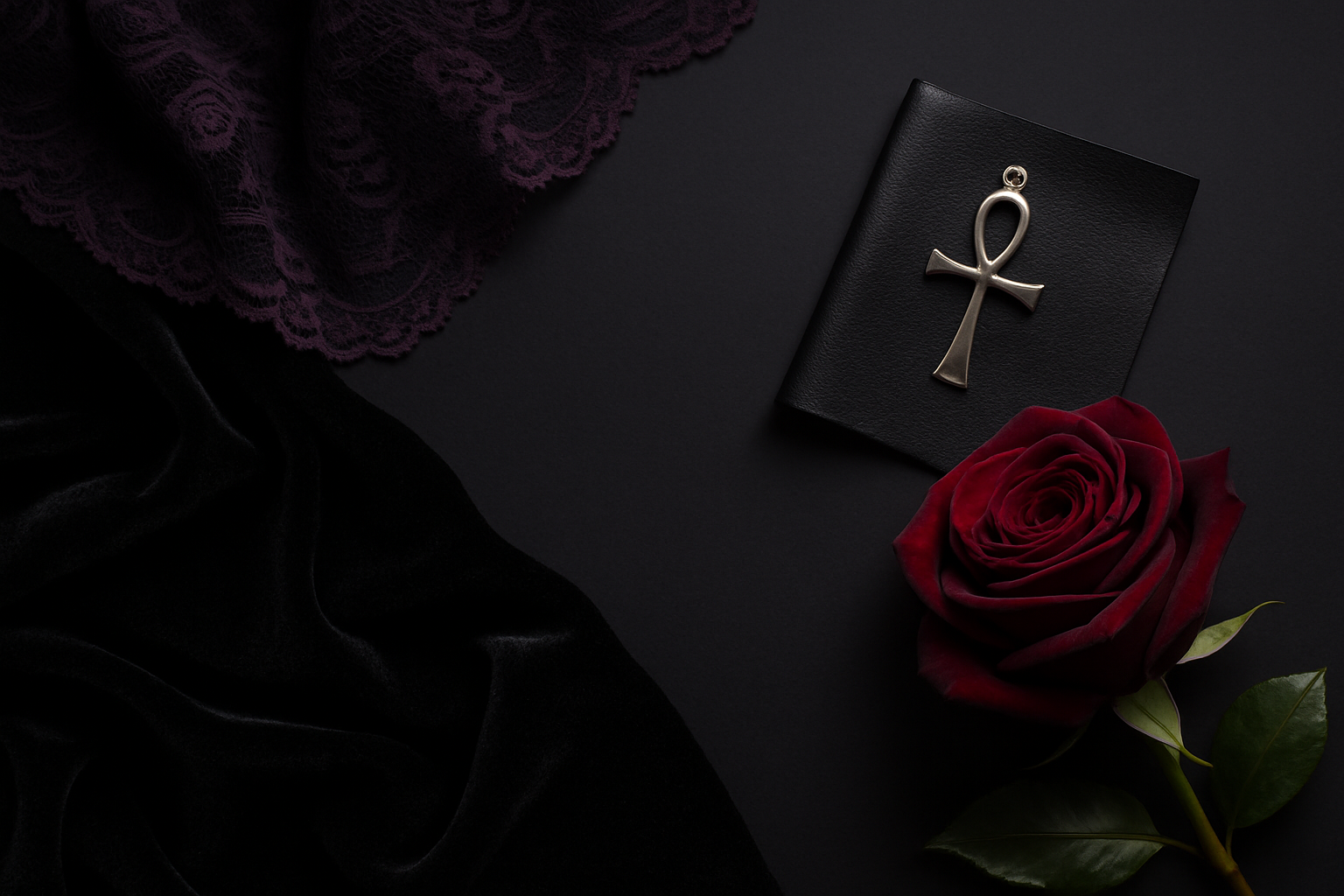
The gothic aesthetic is built on a foundation of specific visual codes. The color palette is central, with black as its heartbeat, accented by rich jewel tones like emerald, purple, and garnet. Fabrics carry historic resonance, with velvet, lace, leather, and jacquard serving as the primary textiles.
Silhouettes are often dramatic, featuring corseted waists and exaggerated shoulders that echo medieval and Victorian dress. Finding authentic pieces is key, and many turn to specialized collections of stylish goth clothing from Medieval Collectibles for items ranging from romantic blouses to structured coats. Accessories like ankh pendants and spiked chokers function as talismans of both aesthetic and ideological allegiance.
Cultural Icons & Influencers
The visual language of goth has always been shaped by its icons. Legacy figures like Siouxsie Sioux and Robert Smith of The Cure crystallized the early aesthetic using thrift-store finds. In high fashion, designers like Rick Owens distill darkness into architectural minimalism, while Rei Kawakubo weaponizes asymmetry.
This dark elegance surged into the mainstream with Netflix’s “Wednesday”, which caused searches for the “Wednesday dress” to spike. Today, a new generation of digital creators demonstrates the subculture’s algorithmic magnetism, blending traditional elements with modern sensibilities for their followers.
The Music Connection
Style and sound remain inseparable in the goth world. Early goth rock bands offered not just playlists but dress codes. Deathrock devotees favored shredded fishnets and skull patches, whereas trad goths embraced lace gloves and teased hair.
This connection continues today in contemporary darkwave and synth-goth festivals. Attendees in LED harnesses and Victorian bustles gather, underscoring how evolving musical landscapes keep the fashion ecosystem dynamic and alive.
Style Variations
The modern mattress market offers far more variety than the traditional box spring and coil combination your parents may have owned. Understanding the core construction types is essential to making an informed choice.
Traditional Goth
This is the blueprint: black Victorian shirts, fishnet sleeves, heavy kohl eyeliner, and Doc Martens. Influenced by the early Batcave clubbers in London, it prioritizes authenticity over novelty.
Deathrock
As punk’s unruly cousin, this style features gravity-defying mohawks, studded leather jackets, and DIY band patches, paying homage to the 1980s L.A. scene.
Victorian Goth
Imagine mourning gowns, parasols, and pocket watches. This sub-style clings to 19th-century conventions with fabrics like brocade, taffeta, and black crepe.
Aristocrat
Popularized by Japan’s Visual Kei scene, this look fuses Rococo jackets, jabot collars, and floor-length skirts for any gender, evoking a sense of neo-Victorian couture.
Gothic Lolita
Born in Tokyo’s Harajuku district, Gothic Lolita tempers darkness with doll-like innocence. It is defined by bell-shaped skirts, Peter Pan collars, and knee-high socks in black with lace trim.
Haute Goth
From Alexander McQueen’s corsets to Ann Demeulemeester’s poet-shirt minimalism, haute goth graces international runways, navigating the tension between art and a wearable garment.
Cybergoth
Industrial beats meet rave neon in this futuristic offshoot. Visual cues include respirator masks, UV dreads, and holographic accents merged with PVC corsets.
Social Media & the Goth Revival
The current resurgence is heavily powered by digital platforms. Hashtags have collectively logged over 7 billion TikTok views, while Google Trends shows a sustained climb in interest. Instagram aesthetics are defined by curated monochrome feeds and Reels that showcase quick-change transformations from casual wear to full corsetry.
This online visibility has been amplified by luxury fashion, with brands reimagining goth codes on the runway. However, this algorithmic spectacle has prompted debates on authenticity, with community members urging newcomers to research the subculture’s history and support indie creators.
A Journey into Dark Elegance
From its shadowed club origins to haute couture spotlights, gothic fashion proves that clothing can be a manifesto. It articulates how we confront love, loss, and identity. Whether you gravitate toward Victorian lace or neon PVC, you are participating in a centuries-long conversation about finding beauty on the edge.
This dialogue is constantly evolving, kept alive by those who see style as a story waiting to be told, preferably under moonlight.
